Film
/
Justin Martin
/
07 Jul 2026

Chumani Katsha: Reconstructing the South African Narrative

Chumani Katsha is a Gqeberha-born filmmaker whose work sits at the powerful intersection of identity, healing, and the heavy realities carried in everyday South African stories. His journey reflects a steady process of becoming.

CHUMANI KATSHA DIPTYCH
Supporting Character (Groetman): Lazama Hlela / Scene from Diptych Part 1

Earlier works such as Ashes, which earned Best Student Film at the Knowmad Institute in Germany in 2024, and Ghost Unit, selected by the Lift Global Network in the UK in 2025, served as the rehearsal stage where his instincts took shape. These pieces built the foundation. Diptych Part 1 now marks the arrival, the moment the guiding idea finally carries a name.


DIPTYCH PART 1 POSTER / VIA CHUMANI KATSHA


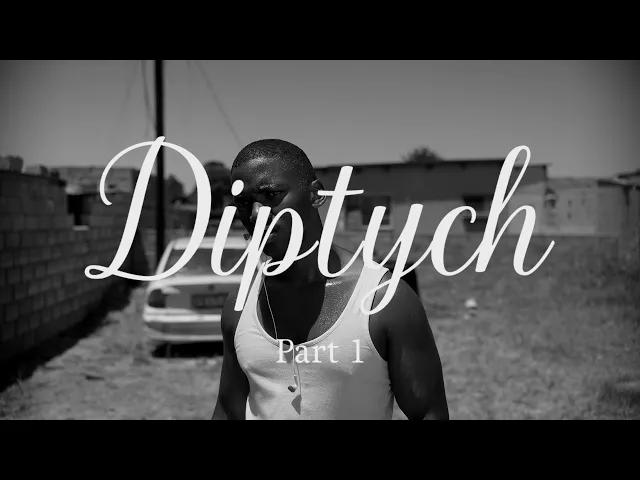
Diptych Part 1

Raised in the township, Zipho works tirelessly to create a better future for himself despite the pressures of poverty, responsibility, and survival that surround him. As he fights to become the man he envisions, the realities of his environment continuously challenge his ambition, forcing him to confront the conflict between where he comes from and who he wants to be. Through this intimate narrative, Katsha explores resilience, aspiration, and the quiet tensions that define many young lives in contemporary South Africa.


Diptych Part 1 forms one of the first outputs of Katsha’s relaunched magazine. Both the film and the platform spring from the same founding ethos: Movement Over Boundaries. This principle drives his mission to reposition documentation and filmmaking as essential tools for reshaping narratives in post-apartheid South Africa. The film and the magazine function as coordinated expressions of one body of work, each reinforcing the other.


CHUMANI KATSHA


For Katsha, Diptych Part 1 represents more than a short film. It serves as a platform to reinvent the role of storytelling in a society where apartheid may no longer be an overt battle but remains a deep subconscious struggle. He seeks to use cinema not merely for entertainment but as a vital instrument for psychological reconstruction and the rebuilding of belief systems in democratic South Africa.

The Return Home

On 16 June, Youth Day, Katsha screened Diptych Part 1 at the Way Of Life Christian Church in the township in Gqeberha. The date itself carries weight. Youth Day marks young people confronting systems they inherited. The screening brought the work back to the community that shaped it. It turned philosophy into lived reckoning, placing the story in the very spaces where its questions matter most.


DIPTYCH PART 1 YOUTH DAY FILM SCREENING POSTER / VIA CHUMANI KATSHA


What does “Movement Over Boundaries” mean to you personally?

"To me, it embodies perseverance, becoming a new person through every challenge I face. I've seen this not only in my own life but in watching others recreate themselves, forced by the depth of what they've been through to build something new."

How has growing up in Gqeberha shaped the stories you choose to tell?

"There's something special about coming from a city that's small, but not that small in a province that can feel forgotten. Because of the way the city is built, you end up moving through different communities almost by default. From a young age, I was learning to embrace that. What ties it all together is one realization: I'm just like them. Our pain points just look different."

What drew you to filmmaking as the medium to explore healing and identity?

"Growing up, I always felt like I was seeing life from an outsider's point of view. Film became the way I could finally step into a story instead of just watching everyone else's. Understanding my identity became a form of healing. My environment never encouraged being different, so I stayed a shell of myself for a while. That was on me to heal and to actually believe in what I was passionate about."


Ta Zwai (The Father): Mncedisi Madolo / SCENE FROM DIPTYCH PART 1


How do you balance raw realism with hope in a story like Diptych?

"The balance lives in understanding pain, emotionally, environmentally, physically, and treating it as a point of no return. It's a hero's journey. You can question what you're served. You can make it yourself, too."

What kind of impact do you hope Diptych Part 1 will have on South African audiences?

"As a director, I want to share a perspective on persevering in environments that feel indifferent. I hope it helps people understand something simple: change starts with one person. And it's that person's responsibility to change the indifference that's stopping them from becoming the point of difference in their community."

Where do you see your work heading in the next few years?

"I want my work to keep treating filmmaking as a form of self-introspection. But introspection only matters if it moves outward. Awards are always welcome, but the real marker of success for me is a voice distinct enough that it holds up across mediums, and consistent enough that it leaves communities better for having been part of the process."


Main Character: Landile Nkengana (Zipho) / SCENE FROM DIPTYCH PART 1


Through projects like Diptych, Chumani Katsha continues to establish himself as a distinctive voice in South African cinema. His commitment to purposeful storytelling offers both a mirror and a window into the complexities of identity, ambition, and healing in today’s South Africa.

The story leaves one question hanging. Does Zipho go back for the people still stuck, or does becoming who he wants to be mean leaving them behind? Part 2 will provide the answer.

Film
/
Justin Martin
/
07 Jul 2026

Chumani Katsha: Reconstructing the South African Narrative

Chumani Katsha is a Gqeberha-born filmmaker whose work sits at the powerful intersection of identity, healing, and the heavy realities carried in everyday South African stories. His journey reflects a steady process of becoming.

CHUMANI KATSHA DIPTYCH
Supporting Character (Groetman): Lazama Hlela / Scene from Diptych Part 1

Earlier works such as Ashes, which earned Best Student Film at the Knowmad Institute in Germany in 2024, and Ghost Unit, selected by the Lift Global Network in the UK in 2025, served as the rehearsal stage where his instincts took shape. These pieces built the foundation. Diptych Part 1 now marks the arrival, the moment the guiding idea finally carries a name.


DIPTYCH PART 1 POSTER / VIA CHUMANI KATSHA


Diptych Part 1

Raised in the township, Zipho works tirelessly to create a better future for himself despite the pressures of poverty, responsibility, and survival that surround him. As he fights to become the man he envisions, the realities of his environment continuously challenge his ambition, forcing him to confront the conflict between where he comes from and who he wants to be. Through this intimate narrative, Katsha explores resilience, aspiration, and the quiet tensions that define many young lives in contemporary South Africa.


Diptych Part 1 forms one of the first outputs of Katsha’s relaunched magazine. Both the film and the platform spring from the same founding ethos: Movement Over Boundaries. This principle drives his mission to reposition documentation and filmmaking as essential tools for reshaping narratives in post-apartheid South Africa. The film and the magazine function as coordinated expressions of one body of work, each reinforcing the other.


CHUMANI KATSHA


For Katsha, Diptych Part 1 represents more than a short film. It serves as a platform to reinvent the role of storytelling in a society where apartheid may no longer be an overt battle but remains a deep subconscious struggle. He seeks to use cinema not merely for entertainment but as a vital instrument for psychological reconstruction and the rebuilding of belief systems in democratic South Africa.

The Return Home

On 16 June, Youth Day, Katsha screened Diptych Part 1 at the Way Of Life Christian Church in the township in Gqeberha. The date itself carries weight. Youth Day marks young people confronting systems they inherited. The screening brought the work back to the community that shaped it. It turned philosophy into lived reckoning, placing the story in the very spaces where its questions matter most.


DIPTYCH PART 1 YOUTH DAY FILM SCREENING POSTER / VIA CHUMANI KATSHA


What does “Movement Over Boundaries” mean to you personally?

"To me, it embodies perseverance, becoming a new person through every challenge I face. I've seen this not only in my own life but in watching others recreate themselves, forced by the depth of what they've been through to build something new."

How has growing up in Gqeberha shaped the stories you choose to tell?

"There's something special about coming from a city that's small, but not that small in a province that can feel forgotten. Because of the way the city is built, you end up moving through different communities almost by default. From a young age, I was learning to embrace that. What ties it all together is one realization: I'm just like them. Our pain points just look different."

What drew you to filmmaking as the medium to explore healing and identity?

"Growing up, I always felt like I was seeing life from an outsider's point of view. Film became the way I could finally step into a story instead of just watching everyone else's. Understanding my identity became a form of healing. My environment never encouraged being different, so I stayed a shell of myself for a while. That was on me to heal and to actually believe in what I was passionate about."


Ta Zwai (The Father): Mncedisi Madolo / SCENE FROM DIPTYCH PART 1


How do you balance raw realism with hope in a story like Diptych?

"The balance lives in understanding pain, emotionally, environmentally, physically, and treating it as a point of no return. It's a hero's journey. You can question what you're served. You can make it yourself, too."

What kind of impact do you hope Diptych Part 1 will have on South African audiences?

"As a director, I want to share a perspective on persevering in environments that feel indifferent. I hope it helps people understand something simple: change starts with one person. And it's that person's responsibility to change the indifference that's stopping them from becoming the point of difference in their community."

Where do you see your work heading in the next few years?

"I want my work to keep treating filmmaking as a form of self-introspection. But introspection only matters if it moves outward. Awards are always welcome, but the real marker of success for me is a voice distinct enough that it holds up across mediums, and consistent enough that it leaves communities better for having been part of the process."


Main Character: Landile Nkengana (Zipho) / SCENE FROM DIPTYCH PART 1


Through projects like Diptych, Chumani Katsha continues to establish himself as a distinctive voice in South African cinema. His commitment to purposeful storytelling offers both a mirror and a window into the complexities of identity, ambition, and healing in today’s South Africa.

The story leaves one question hanging. Does Zipho go back for the people still stuck, or does becoming who he wants to be mean leaving them behind? Part 2 will provide the answer.

Film
/
Justin Martin
/
07 Jul 2026

Chumani Katsha: Reconstructing the South African Narrative

Chumani Katsha is a Gqeberha-born filmmaker whose work sits at the powerful intersection of identity, healing, and the heavy realities carried in everyday South African stories. His journey reflects a steady process of becoming.

CHUMANI KATSHA DIPTYCH
Supporting Character (Groetman): Lazama Hlela / Scene from Diptych Part 1

Earlier works such as Ashes, which earned Best Student Film at the Knowmad Institute in Germany in 2024, and Ghost Unit, selected by the Lift Global Network in the UK in 2025, served as the rehearsal stage where his instincts took shape. These pieces built the foundation. Diptych Part 1 now marks the arrival, the moment the guiding idea finally carries a name.


DIPTYCH PART 1 POSTER / VIA CHUMANI KATSHA


Diptych Part 1

Raised in the township, Zipho works tirelessly to create a better future for himself despite the pressures of poverty, responsibility, and survival that surround him. As he fights to become the man he envisions, the realities of his environment continuously challenge his ambition, forcing him to confront the conflict between where he comes from and who he wants to be. Through this intimate narrative, Katsha explores resilience, aspiration, and the quiet tensions that define many young lives in contemporary South Africa.


Diptych Part 1 forms one of the first outputs of Katsha’s relaunched magazine. Both the film and the platform spring from the same founding ethos: Movement Over Boundaries. This principle drives his mission to reposition documentation and filmmaking as essential tools for reshaping narratives in post-apartheid South Africa. The film and the magazine function as coordinated expressions of one body of work, each reinforcing the other.


CHUMANI KATSHA


For Katsha, Diptych Part 1 represents more than a short film. It serves as a platform to reinvent the role of storytelling in a society where apartheid may no longer be an overt battle but remains a deep subconscious struggle. He seeks to use cinema not merely for entertainment but as a vital instrument for psychological reconstruction and the rebuilding of belief systems in democratic South Africa.

The Return Home

On 16 June, Youth Day, Katsha screened Diptych Part 1 at the Way Of Life Christian Church in the township in Gqeberha. The date itself carries weight. Youth Day marks young people confronting systems they inherited. The screening brought the work back to the community that shaped it. It turned philosophy into lived reckoning, placing the story in the very spaces where its questions matter most.


DIPTYCH PART 1 YOUTH DAY FILM SCREENING POSTER / VIA CHUMANI KATSHA


What does “Movement Over Boundaries” mean to you personally?

"To me, it embodies perseverance, becoming a new person through every challenge I face. I've seen this not only in my own life but in watching others recreate themselves, forced by the depth of what they've been through to build something new."

How has growing up in Gqeberha shaped the stories you choose to tell?

"There's something special about coming from a city that's small, but not that small in a province that can feel forgotten. Because of the way the city is built, you end up moving through different communities almost by default. From a young age, I was learning to embrace that. What ties it all together is one realization: I'm just like them. Our pain points just look different."

What drew you to filmmaking as the medium to explore healing and identity?

"Growing up, I always felt like I was seeing life from an outsider's point of view. Film became the way I could finally step into a story instead of just watching everyone else's. Understanding my identity became a form of healing. My environment never encouraged being different, so I stayed a shell of myself for a while. That was on me to heal and to actually believe in what I was passionate about."


Ta Zwai (The Father): Mncedisi Madolo / SCENE FROM DIPTYCH PART 1


How do you balance raw realism with hope in a story like Diptych?

"The balance lives in understanding pain, emotionally, environmentally, physically, and treating it as a point of no return. It's a hero's journey. You can question what you're served. You can make it yourself, too."

What kind of impact do you hope Diptych Part 1 will have on South African audiences?

"As a director, I want to share a perspective on persevering in environments that feel indifferent. I hope it helps people understand something simple: change starts with one person. And it's that person's responsibility to change the indifference that's stopping them from becoming the point of difference in their community."

Where do you see your work heading in the next few years?

"I want my work to keep treating filmmaking as a form of self-introspection. But introspection only matters if it moves outward. Awards are always welcome, but the real marker of success for me is a voice distinct enough that it holds up across mediums, and consistent enough that it leaves communities better for having been part of the process."


Main Character: Landile Nkengana (Zipho) / SCENE FROM DIPTYCH PART 1


Through projects like Diptych, Chumani Katsha continues to establish himself as a distinctive voice in South African cinema. His commitment to purposeful storytelling offers both a mirror and a window into the complexities of identity, ambition, and healing in today’s South Africa.

The story leaves one question hanging. Does Zipho go back for the people still stuck, or does becoming who he wants to be mean leaving them behind? Part 2 will provide the answer.

Join our newsletter for exclusive stories, early access to drops, event invites and curated recommendations straight to your inbox.

Latest Articles

Latest Articles

© 2026 JUMIRO MAGAZINE / ALL RIGHTS RESERVED

© 2026 JUMIRO MAGAZINE / ALL RIGHTS RESERVED

© 2026 JUMIRO MAGAZINE / ALL RIGHTS RESERVED